
'Every mission is judged at the point where the State meets its citizens. What citizens expect from us is simple -- they expect to be heard, to receive a decision in real-time, and to be treated with dignity whatever their circumstances.'

Educationists and policy experts at the Indian Statistical Institute (ISI) in Kolkata emphasised the critical need for developing a robust database, leveraging modern technology and artificial intelligence, to enhance effective policymaking. The two-day conclave, featuring prominent speakers like Prof S Mahendra Dev, highlighted the ongoing transformation in official statistics and the importance of public trust and research.

The Delhi government's Drugs Control Department conducted extensive inspections, detecting numerous violations and seizing illegal medicines worth Rs 13.29 lakh. These efforts are part of a zero-tolerance approach against spurious and counterfeit drugs, aiming to ensure quality and safety standards in the national capital.

The Karnataka State Lawn Tennis Association (KSLTA) has become the first state tennis body in India to adopt the National Sports Governance Act, 2025. This move, following AITA's earlier adoption of constitutional amendments, aims to promote transparency, accountability, and ethical administration in sports.

International Hockey Federation (FIH) president Tayyab Ikram stated that the Pakistan Hockey Federation (PHF) was informed well in advance about India hosting the Asian Champions Trophy. He expressed concern that global hockey suffers when India and Pakistan do not play each other regularly, despite Pakistan's decision to pull out of the recent tournament due to government policy. Ikram emphasized the importance of their rivalry for the sport's growth and viewership.

Global companies like LG Electronics, Smartworks, Microsoft, and HCL Technologies lauded Uttar Pradesh's investor-friendly policies, infrastructure, and talent at the GCC Innovation Summit 2026. They shared positive experiences, highlighting the state's swift decision-making and commitment to fostering a conducive environment for Global Capability Centres, leading to significant investments and job creation.

If the new MDR regime is rolled out from the middle of this month, as scheduled, it should count as one of the boldest political actions by the Modi government on an economic-policy issue, and a signal that it is less worried about erosion of political capital it draws from one of its key constituencies, notes A K Bhattacharya.

Cricket Scotland has announced it will not schedule matches against Afghanistan outside ICC events due to concerns over the Taliban government's treatment of women and girls and broader human rights issues. This decision aligns with similar stances taken by Cricket Australia and the England and Wales Cricket Board.
The Central Information Commission (CIC) has directed the National Rifle Association of India (NRAI) to disclose the specific rules and policies behind its requirement for shooters to submit an affidavit on a non-judicial stamp paper for date of birth verification. The directive came after an RTI appeal sought clarity on the basis for this mandatory requirement, which the NRAI stated was part of its age fraud prevention measures.

IndiGo is undertaking a comprehensive review of its long-standing policy against fuel hedging, particularly in light of rising jet fuel prices and its ambitious long-haul expansion plans. CEO Willie Walsh stated that while domestic competitors don't hedge, international expansion necessitates a re-evaluation to manage risk and provide stability against volatile fuel costs.

The Government of Karnataka has called for enhanced collaboration with the BFSI and FinTech sectors to bolster its technology ecosystem and accelerate the adoption of innovative solutions. This initiative, discussed at an Industry Meet, aims to foster partnerships between government, industry, and academia, particularly through programmes like 'Government First', in preparation for the Bengaluru Tech Summit 2026.

The Delhi High Court has upheld the Centre's decision to increase passport fees for Indians residing abroad, dismissing a petition that challenged the 67 per cent hike. The court ruled that the increase, implemented after 14 years, was not unreasonable or exorbitant and falls within the government's policy domain, warranting no judicial intervention. The petition, filed by Pravasi Legal Cell, argued that the higher fees disproportionately affect low-income Indian workers abroad.

India's government is set to release its draft National Steel Policy for public consultation, aiming for over 600 million tonnes of steelmaking capacity and 500 million tonnes of consumption by 2047. The policy will also introduce a ~5,000-crore scheme to incentivise small steel producers for carbon emission reduction and address challenges like raw material availability and technological dependence.

NITI Aayog has called for a fundamental overhaul of urban governance in India, advocating for empowered city governments, directly elected mayors with five-year terms, and greater financial autonomy for urban local bodies to manage the country's rapidly growing urban population.

The Indian government has indicated that Punjab Chief Minister Bhagwant Mann is unlikely to receive clearance to attend a conference in Lahore. The Ministry of External Affairs cited India's national policy towards Pakistan, particularly after the Pahalgam terror attack, as the reason for the probable denial. Mann was reportedly invited as chief guest to the International Punjabi Conference in Lahore from November 27 to 29.

'Pranab-ji, had developed serious differences with P Chidambaram, and on one occasion, in 2010, I think, after expressing his frustration, he shocked me with the suggestion that perhaps it was time for a change at the top, which I understood as a hint of his long-held desire to become prime minister.'

State Bank of India (SBI) Chairman C S Setty has warned that artificial intelligence-related errors could cascade across interconnected financial systems, creating significant governance risks for institutions. He emphasised the critical need for clearly defined permissions, transaction limits, audit trails, and human intervention mechanisms as banks increasingly deploy autonomous AI systems.
A new report from Cambridge University Press & Assessment highlights the critical need for Indian policymakers to collaborate with teachers in developing AI education policies. The study emphasizes investing in teacher professional learning and involving educators and learners in the design and evaluation of AI tools to ensure policies are grounded in classroom realities and promote critical AI literacy.

Prime Minister Narendra Modi has warned that while armed Maoists have been largely eliminated, 'dimagi Naxals' (ideological supporters) continue to instigate people against the Constitution and democracy, having infiltrated various organisations and political parties.

Pragya Misra, OpenAI's first India hire and former head of strategy and global affairs, has been promoted to Head of Business Development for India and South Asia. She announced her new leadership role on Tuesday, highlighting India's status as ChatGPT's largest country. Misra's new focus will be on building partnerships to drive AI transformation for businesses and expand technology access across the region.

Mining magnate Anil Agarwal has cautioned that the government's decision to transfer operations of a producing offshore oil and gas block from Vedanta to state-run ONGC could send a "very wrong signal" to investors, urging policymakers to maintain regulatory stability.
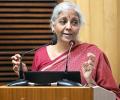
Finance Minister Nirmala Sitharaman has criticised Congress leader Rahul Gandhi for alleging the 'criminal destruction' of the Tata Group, urging him to refrain from 'politicising' commercial and legal matters and accusing him of trying to incite business leaders.
Retired IAS officer Devesh Chaturvedi has assumed office as the chairperson of the newly formed National Sports Board (NSB), an apex authority with powers to grant or suspend recognition of national sports federations. Former TOPS CEO Commodore (retd) Pushpendra Kumar Garg also joined as a member.
The Finance Ministry has clarified that the decision to impose a 0.4% Merchant Discount Rate (MDR) on UPI transactions above Rs 2,000 was made independently, refuting claims of foreign influence. The ministry stated the policy aims to build a self-sustaining digital payments ecosystem, with MDR funding infrastructure and supporting small merchants.

The Finance Ministry has dismissed allegations of US pressure influencing the 0.4% Merchant Discount Rate (MDR) on select UPI transactions. It clarified that NPCI guidelines prioritise RuPay credit cards on UPI and do not favour international cards. The ministry also asserted that the MDR, applicable to person-to-merchant transactions above Rs 2,000, is unlikely to increase cash transactions or cause inflation, with measures in place to prevent burdening consumers.

Congress leader Rahul Gandhi has declared Indian democracy 'sacred' and dismissed the idea of boycotting elections, arguing it would dismantle the country's democratic framework. His remarks, made at the University of Chicago, came as the BJP intensified its criticism, accusing him of spreading anti-India propaganda by reiterating vote theft allegations on foreign soil. Gandhi also commented on India's foreign policy and the Israel-Gaza conflict.

The Vadodara Municipal Corporation has approved a controversial proposal to allot a 978-square metre disputed land parcel to former cricketer and TMC MP Yusuf Pathan. The deal involves giving 500 sq m for free and the rest at a discount, sparking protests from the Opposition Congress, which alleges corruption and double standards. The land has been under dispute since 2012, with Pathan occupying it despite a 2014 rejection of his allotment request.

CJP founder Abhijeet Dipke has boldly predicted the Modi government's defeat in the 2029 Lok Sabha elections, urging citizens to prepare for a change while demanding electoral reforms.

The Indian rupee and government bonds are expected to face volatility in Samvat 2083, influenced by geopolitical developments in West Asia, crude oil prices, domestic inflation, and foreign capital flows, leading to cautious investor sentiment.

Nvidia's board is reportedly considering the removal of CEO Jensen Huang due to revelations of two alleged extramarital relationships. One relationship involves a businesswoman suspected of links to Chinese intelligence, while another is with a subordinate at Nvidia. These developments have raised questions about corporate governance and potential conflicts of interest.

Andhra Pradesh is developing a 25,000 crore space city near Sriharikota, aiming to create a robust ecosystem for private space technology startups and MSMEs, with major deals already signed for rocket engine manufacturing, testing, and R&D.

From December 15, 2026, motor insurance buyers can choose their coverage more transparently, compare premiums for individual covers and avoid paying for protection they do not need.

Union Home Minister Amit Shah announced that Kashmir is now free from India-born terrorists after 35 years, calling it a "major milestone". He emphasised strengthening proactive counter-terrorism policies, dismantling entire terrorist networks, and bringing fugitives to justice. Shah highlighted successful coordinated operations, including the PFI ban and the dismantling of the Shahzad Bhatti Network, advocating for an ecosystem approach with stronger Centre-state cooperation.
The BJP has strongly criticised Congress leader Rahul Gandhi for his comments on India's global standing and a Trump-Xi-Putin meeting, accusing him of being "clueless on geopolitics" and promoting "pro-Pakistan propaganda." BJP leaders highlighted India's strategic autonomy and engagement with various global forums, while questioning Gandhi's understanding of international diplomacy.
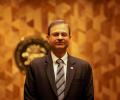
Economists anticipate the Reserve Bank of India (RBI) will increase the repo rate by another 50-75 basis points, pushing the terminal rate to 6-6.25 per cent, as retail inflation surpassed the central bank's 6 per cent tolerance limit in October.

The Indian government has challenged Congress leader Rahul Gandhi's criticism of levying fees on UPI payments above Rs 2,000 to merchants. The government highlighted that a parliamentary standing committee, which included Congress MPs, had previously backed a tiered Merchant Discount Rate (MDR) framework for UPI. This move aims to ensure the financial sustainability of the UPI ecosystem and reduce its dependence on government subsidies, a concern raised by the committee due to the significant funding gap between allocations and operational costs.

The Defence Ministry invoked national security to deny information regarding the appointment process of the Chief of Air Staff, including names of officers considered and policy guidelines. This denial, upheld by the Central Information Commission, came after multiple defence offices were unable to identify the authority holding such records, highlighting transparency issues.
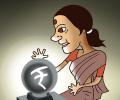
The Finance Ministry has refuted allegations that US pressure influenced the decision to levy a 0.4% Merchant Discount Rate (MDR) on select UPI payments. It clarified that NPCI guidelines prioritise RuPay credit cards on UPI to foster a domestic payment ecosystem and that the MDR introduction aims to create a sustainable revenue model for smaller domestic companies, thereby protecting India's sovereignty in digital payments.

The Congress party has strongly criticised the Modi government's decision to introduce a 0.4% Merchant Discount Rate (MDR) on UPI transactions over Rs 2,000, alleging it is a result of US pressure to benefit American card companies. The party also linked this move to broader US actions against India, including tariffs and H-1B visa issues, coining the term "Narendra's Ongoing Trump Appeasement." The government, however, clarified that consumers will not bear the charge, which applies only to merchants.

The RSS-affiliated Swadeshi Jagran Manch (SJM) has urged the government to reconsider imposing a merchant discount rate (MDR) on UPI transactions above Rs 2,000, arguing that the costs do not warrant such a move. This comes after the government announced a 0.4 per cent fee on merchant transfers over Rs 2,000 from October 15, while assuring that person-to-person and small payments remain free. SJM co-convener Ashwani Mahajan highlighted that banks have not demanded MDR and that UPI has reduced their transaction costs.
